An AI logo generator
A logo in five minutes instead of two weeks and a studio invoice — it sounds too good. In practice a neural network really can give you a strong logo, but only if you understand how this task differs from ordinary picture generation. A logo isn't "a beautiful illustration" but a mark: it has to be simple, recognizable, work in one colour and at a small size. That's what we'll teach the prompt.
Why "draw a coffee shop logo" doesn't work
If you just ask for "a coffee shop logo", the network gives a detailed picture of a cup — pretty, but useless as a logo: you can't shrink it to an icon, print it in one ink, put it on a sign. A good logo prompt sets constraints:
- Mark type — wordmark (the name), graphic (a symbol) or combined.
- Style — minimalist, geometric, vintage, handwritten. For a logo it's almost always "minimalist, simple, clean".
- Symbol idea — what it reflects (a coffee bean, a cup, a mountain).
- Technical frame — "flat, no gradients or shadows, one or two colours, on a white background, vector style".
Example: "a minimalist flat coffee shop logo, a stylized coffee bean, simple lines, two colours, on a white background, vector style" gives something usable, not a wallpaper picture.
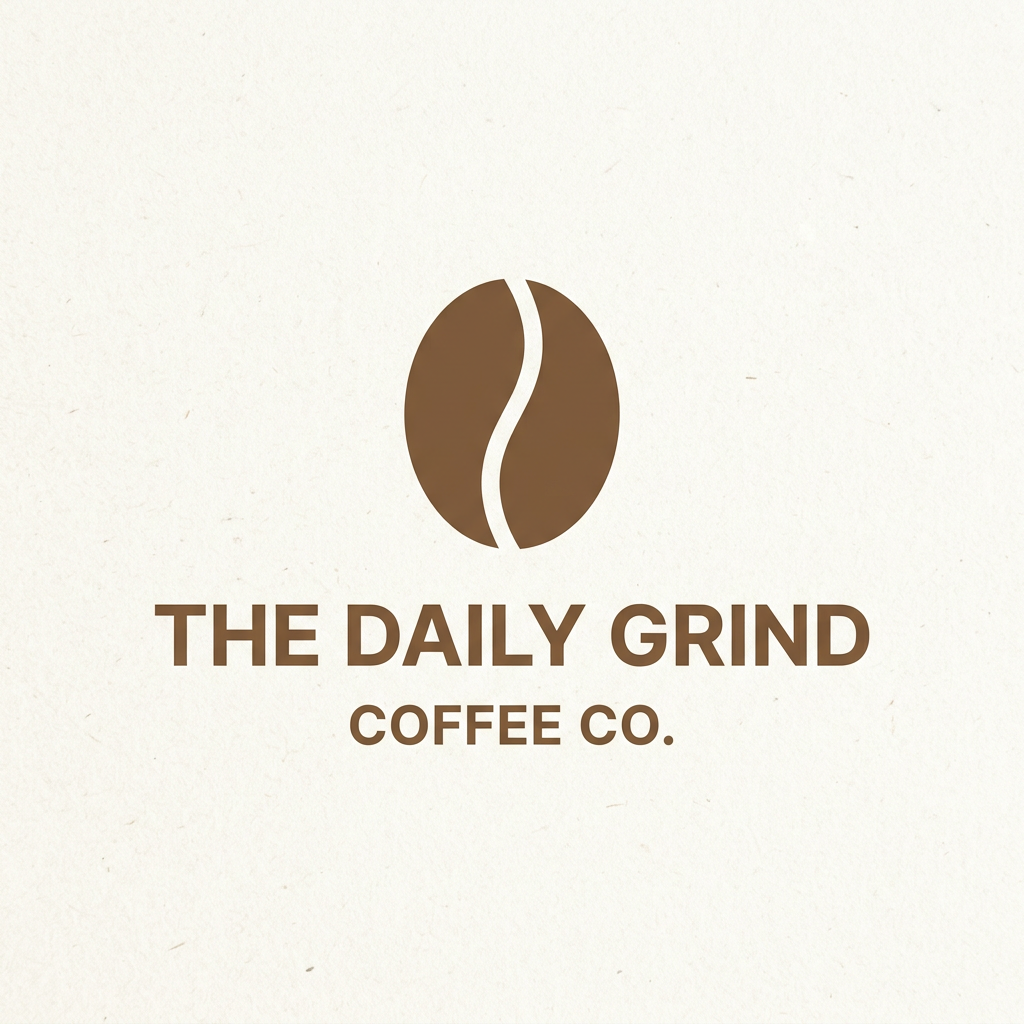
Describe the name, the field and the brand's mood — and get several logo concepts right here.
Text in a logo — a separate pain
If you need the name itself inside the mark, remember most models' weak spot — letters. Here models that are strong at text help (Ideogram), or a trick: generate the symbol with the network and add the name in a normal font in an editor. That's often more reliable than coaxing perfect letters out of the generator.
From a logo to a brand identity
A logo is almost never needed on its own. After it come a palette, fonts, social-media design, business cards — a whole brand identity. And this is where a neural network in dialogue form is especially strong: instead of generating disjointed pictures you can run a brief by conversation and assemble a coherent set where everything matches.
A logo brief template
A list of questions that, once answered, gives you a prompt that produces a usable result on the first or second try, not a hundred random variants.
Входит в подписку
Soberly about the limits
A neural network is excellent for a start, testing ideas, a logo for a small project or a freelancer. But for a serious brand a logo is also a uniqueness check, protection, work with meaning; here AI is a powerful draft and idea generator, not a replacement for strategy. The best approach: sketch options with the network, choose a direction, and finish with a designer if needed.
What's next
From identity we'll move to one of the most "money" scenarios for images — product cards for marketplaces.
You can assemble a logo and a whole brand identity in one dialogue on the Twelver logo generator page — brief, concepts, palette and brand book in one conversation.
Try it yourself
Everything in this guide runs inside Twelver
One chat for text, images, video, music and voice — no separate services or subscriptions.
Open Twelver chat