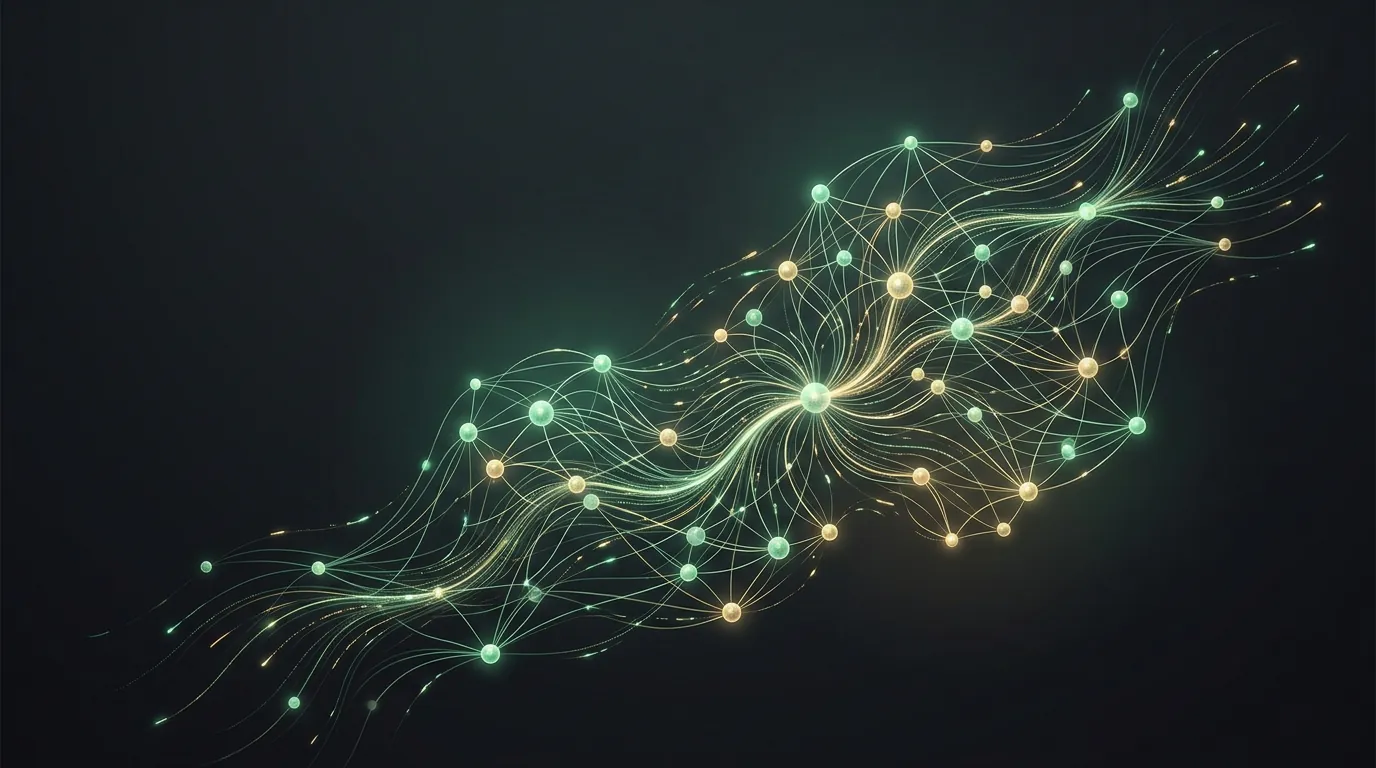
What a neural network is and how it works
"Neural network" sounds complicated, but the idea behind it is simple. It's a program that doesn't follow a rigid list of rules but learns from examples — roughly the way a person does. Show it millions of photos of cats captioned "cat", and it starts recognizing a cat even in a picture it has never seen. Nobody coded "whiskers + tail + ears" into it: it worked that out on its own.
Are a neural network and AI the same thing?
Not quite. Artificial intelligence (AI) is the broad umbrella — any attempt to make a machine do "smart" things. A neural network is one specific, today the most successful, way to do that, inspired by how the brain is built: many simple "neurons" connected together, with the strength of those connections tuned during training. In everyday speech "neural network", "AI" and "artificial intelligence" are used as synonyms — and that's fine.
Where the "creativity" comes from
A generative neural network doesn't store ready answers or copy them from the internet. It absorbed patterns: which words usually follow each other, what "a sunset over the sea" looks like, how a sad melody sounds. When you give a request, it builds up the most likely continuation piece by piece. That's why two identical requests almost never give an identical result — there's always an element of randomness in the process.
Why it sometimes gets things wrong
The same nature produces its weaknesses. A neural network can confidently invent a fact that doesn't exist (this is called a "hallucination"), gets confused with fingers in pictures and text on signs, and doesn't know events after its training date. A simple rule: a neural network is a brilliant intern, not a reference book. Ideas and drafts — yes, but facts and figures are worth checking.

Enough theory — see what it looks like live. Describe any scene and a neural network will draw it from scratch:
A neural network wrote that the Eiffel Tower is in Berlin. What is this?
What's next
Now that it's clear how a neural network thinks, it makes sense to learn where you can use it without paying anything. The next chapter is about free neural networks with no sign-up and what really hides behind the word "free".
You can repeat every example in the Twelver chat: text, images, video, music and voice-over in one conversation. Your first generations are free after signing up.
Try it yourself
Everything in this guide runs inside Twelver
One chat for text, images, video, music and voice — no separate services or subscriptions.
Open Twelver chat